
Sony's next-generation console, widely expected to be called the PlayStation 6 (PS6), is already generating interest among gamers. One of the biggest questions surrounding the next PlayStation is whether its launch could face a delay.
At present, Sony has not officially confirmed a PlayStation 6 release delay. As a result, claims about a delayed PS6 launch should be treated as speculation unless they are supported by an official Sony announcement or reliable reporting.
However, previous console launches show that hardware development, component availability, manufacturing capacity, supply-chain conditions and software readiness can all affect the launch of new gaming hardware. In this article, we examine these possible factors and look at what previous PlayStation launches can tell us about a potential PS6 delay.
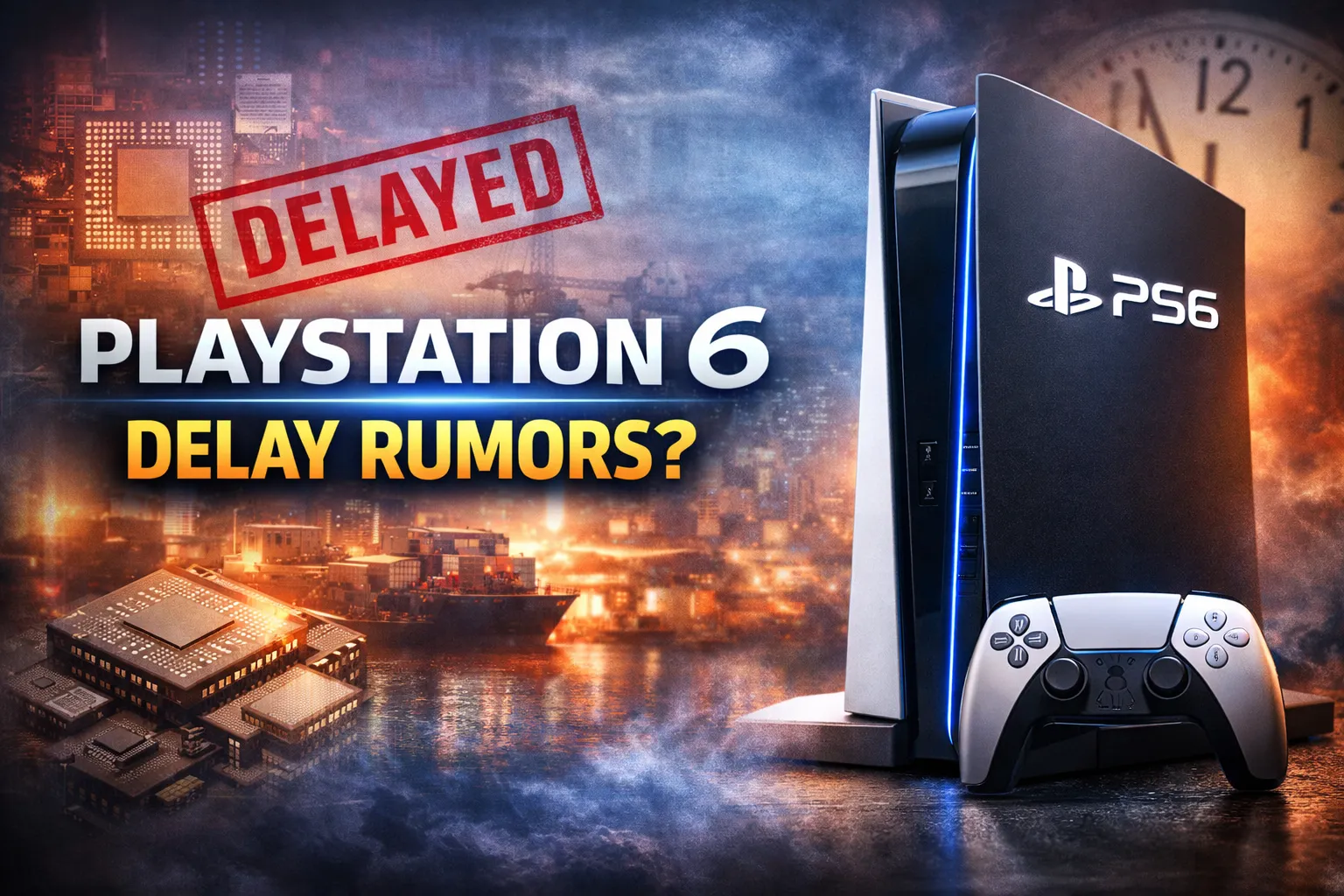
Important: A PlayStation 6 delay has not been presented here as a confirmed Sony announcement. Specific PS6 release-date claims should be treated cautiously until Sony provides official information.
Why Are There Rumors About a PlayStation 6 Release Delay?
A new console generation requires significant research, development, testing and manufacturing preparation. The PlayStation 6 is expected to introduce new hardware and potentially improved graphics and system technologies, although Sony has not publicly confirmed every detail of the future console.
Technologies associated with next-generation gaming hardware can include more powerful graphics processing, improved ray tracing, AI-assisted upscaling and better power efficiency. Developing and testing new components at scale can take considerable time.
Supply-chain conditions can also affect the availability of electronic components. These factors do not prove that the PS6 will be delayed, but they help explain why manufacturing and hardware development are often discussed when considering the launch of a future console.
Past PlayStation Delays and Supply Problems
Looking at previous PlayStation generations provides useful historical context. These examples cannot predict the PS6 launch schedule, but they demonstrate that console launches can be affected by hardware and manufacturing challenges.
PlayStation 5 Supply Shortage
The PlayStation 5 launched in November 2020, during a period when the global electronics industry was facing major supply-chain disruption. The COVID-19 pandemic, semiconductor shortages and manufacturing difficulties contributed to problems with hardware availability across the industry.
PS5 availability remained difficult in many markets after launch, while demand for the console was high. The situation became an important example of how external supply-chain conditions can affect the availability of new gaming hardware.
The PS5 shortage should not be considered proof of a future PlayStation 6 release delay. Instead, it is a historical example of the challenges that can occur when launching hardware on a global scale.
PlayStation 3 Launch Delay
The PlayStation 3 provides another historical example of a console launch being affected by hardware-related issues. Sony delayed the European launch of the PS3 in 2006, with Blu-ray production problems among the factors associated with the change in launch timing.
The PS3 example demonstrates why complicated hardware components and manufacturing processes can influence the timing of a console launch. However, the circumstances surrounding the PS3 were different from those of a possible PlayStation 6 launch.
What Could Cause a PlayStation 6 Release Delay?
Several factors could potentially affect the launch schedule of a next-generation console. None of the factors below should be interpreted as confirmation that Sony has delayed the PS6.
Advanced Chip Development
A new console generation requires a new system architecture and processor technology. Developing, testing and preparing advanced chips for mass production can be a complex process.
If processor development, testing or manufacturing capacity does not progress according to schedule, it could potentially affect the timing of a console launch. Specific PS6 chip specifications should only be treated as confirmed when Sony or another reliable source officially supports them.
Manufacturing and Supply-Chain Challenges
A global console launch requires a large and reliable supply chain. Components must be produced, assembled, tested and shipped in sufficient quantities before a major launch.
Unexpected component shortages, manufacturing problems or logistics disruptions could potentially affect production. Previous console launches demonstrate why these issues can be important when planning large-scale hardware releases.
Rising Manufacturing Costs
The cost of producing a new console can also influence launch planning. Advanced processors, memory, storage, cooling systems and other components can increase the complexity and cost of manufacturing.
If production costs are significantly different from expectations, Sony could potentially adjust aspects of its hardware strategy, pricing or production schedule. However, there is currently no basis for presenting a specific PS6 manufacturing-cost issue as a confirmed reason for a delay.
Software and Game Readiness
Hardware is only one part of a console launch. System software, development tools and games also need to be prepared for a new platform.
If important first-party games or system software were not ready for launch, a company could potentially adjust its release plans. At this stage, however, there is no official confirmation that software development is causing a PS6 delay.
What Would a PS6 Delay Mean for Gamers?
If the PlayStation 6 launch were delayed, gamers could potentially have more time with the PlayStation 5 and its existing game library. Developers could also receive additional development time for next-generation titles.
- The PlayStation 5 could remain relevant for a longer period.
- Developers could have additional time to polish next-generation games.
- Sony could have more time to prepare hardware and production capacity.
- System software and launch features could receive additional development time.
These are possible outcomes rather than confirmed plans. Sony's actual strategy would depend on its hardware, software and business decisions at the time of the PS6 launch.
Until more information becomes available, gamers can continue exploring current releases through GamingDon's game reviews and keep up with gaming-related content through the GamingDon gaming blog .
For additional gaming content and gameplay-related updates, readers can also visit Hurray Gamer .
Has Sony Confirmed a PlayStation 6 Delay?
Sony has not officially confirmed a PlayStation 6 release delay in the information discussed in this article. Therefore, specific claims about a delayed launch should not be treated as confirmed news unless Sony officially announces them.
Reports from industry analysts, suppliers and gaming publications can provide useful context, but reports and rumors are different from an official announcement.
Readers should therefore distinguish between confirmed information, industry reporting and speculation when following PS6 news. Sony's official announcements should remain the primary source for confirmed information about the next PlayStation.
You can also explore more gaming-related information on GamingDon or browse the latest articles in the gaming blogs section .
Final Thoughts
A PlayStation 6 release delay is currently a subject of rumors and speculation rather than a confirmed Sony announcement. Previous PlayStation launches show that hardware development, component availability, manufacturing and software readiness can all influence the timing of major gaming hardware.
These historical examples provide useful context, but they cannot confirm the launch schedule of the PS6. Until Sony provides official information, gamers should treat specific PS6 release-date and delay claims cautiously.
For the latest confirmed information, it is best to follow official announcements while continuing to explore current gaming news, reviews and guides on GamingDon .
Frequently Asked Questions About the PS6 Release
Is the PlayStation 6 release delayed?
Sony has not officially confirmed a PlayStation 6 release delay. Therefore, claims about a delayed PS6 launch should currently be treated as unconfirmed unless supported by an official announcement.
When will the PlayStation 6 be released?
Sony's official PS6 release date should be used when the company announces one. Specific dates circulating online before an official announcement should be treated as rumors, reports or estimates.
Why could the PS6 be delayed?
Potential factors could include advanced hardware development, component availability, manufacturing capacity, supply-chain conditions and software readiness. These are possible factors and are not confirmed reasons for a PS6 delay.
Has Sony announced the PlayStation 6?
Confirmed information about the PlayStation 6 should come from Sony or reliable sources reporting verifiable information. Readers should be cautious with unofficial specifications, release dates and social-media rumors.
What factors could cause a PlayStation 6 release delay?
Advanced chip development, manufacturing and supply-chain challenges, rising manufacturing costs, and software or game readiness could potentially affect the launch schedule of a next-generation console. These are possible factors, not confirmed reasons for a PS6 delay.
Could supply-chain problems affect the PS6 launch?
Supply-chain conditions can affect the availability of electronic components. A global console launch requires components to be produced, assembled, tested and shipped in sufficient quantities, so unexpected shortages or logistics disruptions could potentially affect production.
What happened with previous PlayStation launches?
The PlayStation 5 faced major supply and availability problems after its November 2020 launch, while Sony delayed the European PlayStation 3 launch in 2006, with Blu-ray production problems among the factors associated with the change in launch timing.
What would a PS6 delay mean for gamers?
A delayed PlayStation 6 launch could potentially give gamers more time with the PlayStation 5 and its existing game library, while developers could receive additional time to polish next-generation titles and Sony could have more time to prepare hardware, production capacity and system software.